


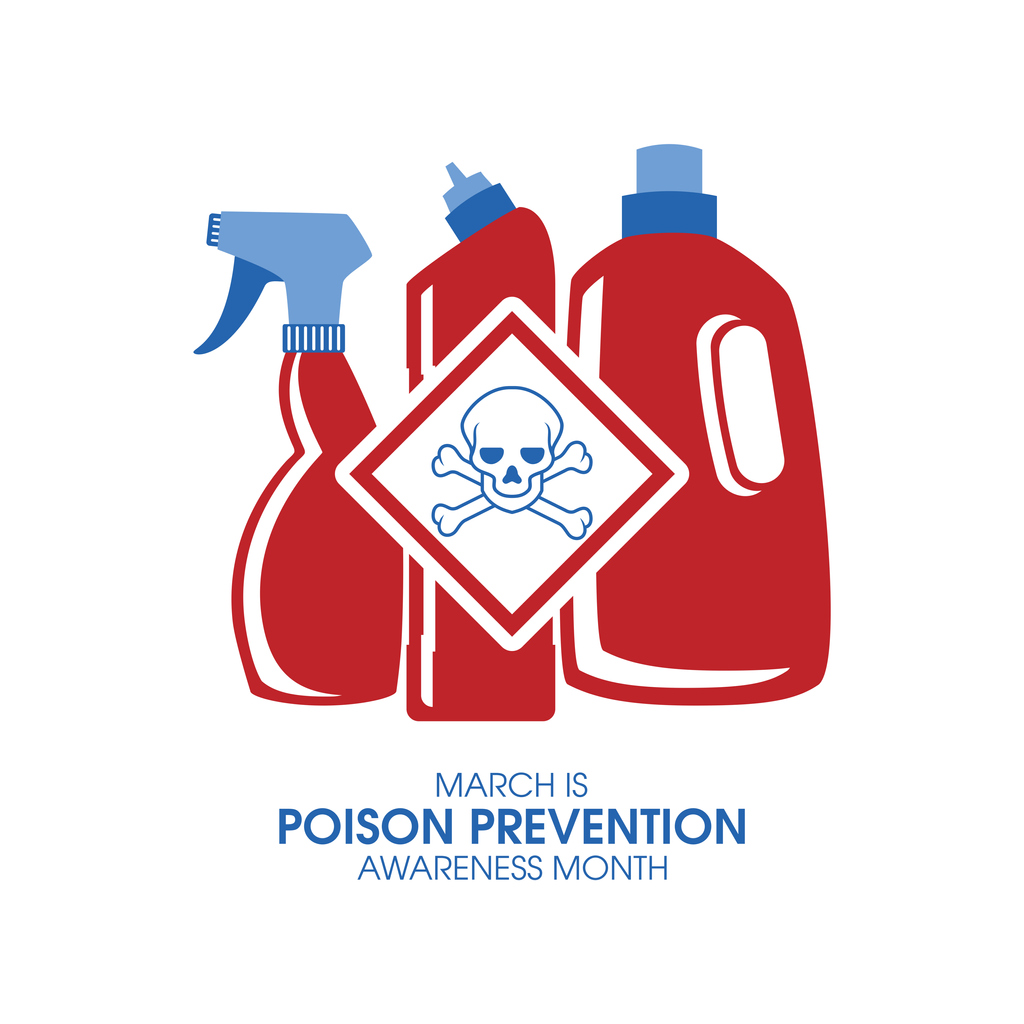
This week is Poison Prevention Week. We’ll be highlighting ways to keep your garage and vehicle organized to eliminate safety hazards due to chemicals, oil, and other fluids. We’ve got some tips on how to dispose of them safely, how to best clean up those messes, and even how to keep your pets out of harm’s way in the garage. Check it out on today’s blog!

Tips to Keeping Your Garage Safe from Chemicals and Hazardous Wastes
- Old batteries have a risk of corrosion and leaks, and properly disposing of them at designated waste collection sites can prevent injury and environmental damages. Bring old or used car batteries to your local recycling center instead of storing them in your garage. Some local auto parts stores may even have a battery drop-off program.
- When changing your oil, use a drain pan and collection bucket to catch the fluids as they’re released. Bring them to your local designated hazardous waste disposal facility or recycling center immediately. If you’ve spilled oil in your garage, you can use an oil absorbent mat, a substance like Oil-Dri, or the standby of kitty litter.
- Pour liquids such as coolant or brake fluid or other contaminated fluids into a bucket or bin of kitty litter. It will absorb the liquid, and make it easier to transport to the waste facility.
- If you’ve spilled fluids, you can absorb the spill with clay cat litter, play sand, cornmeal, cornstarch, or even baking soda. Apply one of these substances over the spill stain immediately, and this will help prevent it from seeping into the concrete or pavement of your garage.
Let’s learn how to safely dispose of and recycle Used Oil and Other Fluids from your Vehicle thanks to 1A Auto on YouTube:
Keeping Fido and Fluffy Safe from Hazards in the Garage
If you’re anything like us, you love having your faithful furry friends by your side in anything you do, but did you know that there are plenty of dangers to be found in your household garage? Things you may not expect can pose hazards to our canine and feline companions, as well as others! We’re going to help you find ways to keep those little critters out of trouble, identify hazards to put far out of reach, and how to keep them safe if they get into your garage.
- Never leave your pets unattended in a garage. Garages can become extremely hot or extremely cold quite rapidly. This can cause temperature related illnesses such as heat stroke or frostbite. Make sure that if your pet is spending extended periods in a garage, it’s always by your side. Even if you’ve provided heating/cooling and adequate ventilation or water, it is not safe to leave your pets inside.
- There are numerous chemical liquids with corrosive properties that can cause burns, digestive upsets, or even fatalities if ingested by our pets. Be sure that antifreeze, gasoline, motor oil, insect sprays, paints, cleaners, herbicides, soil bags, polishing solutions, wiper fluid, and other liquids are stored in their original containers and tightly sealed. Store them up and away from prying paws and nosy sniffers. Clean up all spills and leaks immediately after they happen. Keep your pets out of the way if you’re performing fluid changes or top-offs so they do not drink or lick any spills.
- Keep tools and batteries up and off the floor, and do not allow pets to lick them or chew on them. They’re at risk for serious injury, electrocution, and even death.
- Utilize airtight and locking storage items. Place small items into lidded plastic bins that have child-lock features. All tools and ephemera should be placed into toolkit boxes and locked securely so that your pet cannot get into it, knock it down, or open it to see what “forbidden snacks” are inside.
- Keep garbage and waste bins secured. Pets love to sniff and explore inside trash cans, garbage bags, recycling bins, etc, so it’s important you keep them stowed safely to reduce risk of suffocation by bags or other serious injury due to ingestion or otherwise.
- Clean the garage floor thoroughly when you’re working on your projects and regular vehicle maintenance. Even residual waste from chemicals, solvents, or soaps can pose a threat if licked or ingested or skin contact.
Looking for local waste pickup or disposal sites in the Waukegan area? We’ve got you covered with this helpful website. Please note, some facilities or programs may have a requirement for advance registration before you can drop off your chemicals or hazardous waste items.
![[Facebook]](https://www.classickiaonline.com/blogs/294/wp-content/plugins/bookmarkify/facebook.png)
![[LinkedIn]](https://www.classickiaonline.com/blogs/294/wp-content/plugins/bookmarkify/linkedin.png)
![[Twitter]](https://www.classickiaonline.com/blogs/294/wp-content/plugins/bookmarkify/twitter.png)
![[Yahoo!]](https://www.classickiaonline.com/blogs/294/wp-content/plugins/bookmarkify/yahoo.png)
![[Email]](https://www.classickiaonline.com/blogs/294/wp-content/plugins/bookmarkify/email.png)


 Warranties include 10-year/100,000-mile powertrain and 5-year/60,000-mile basic. All warranties and roadside assistance are limited. See retailer for warranty details.