


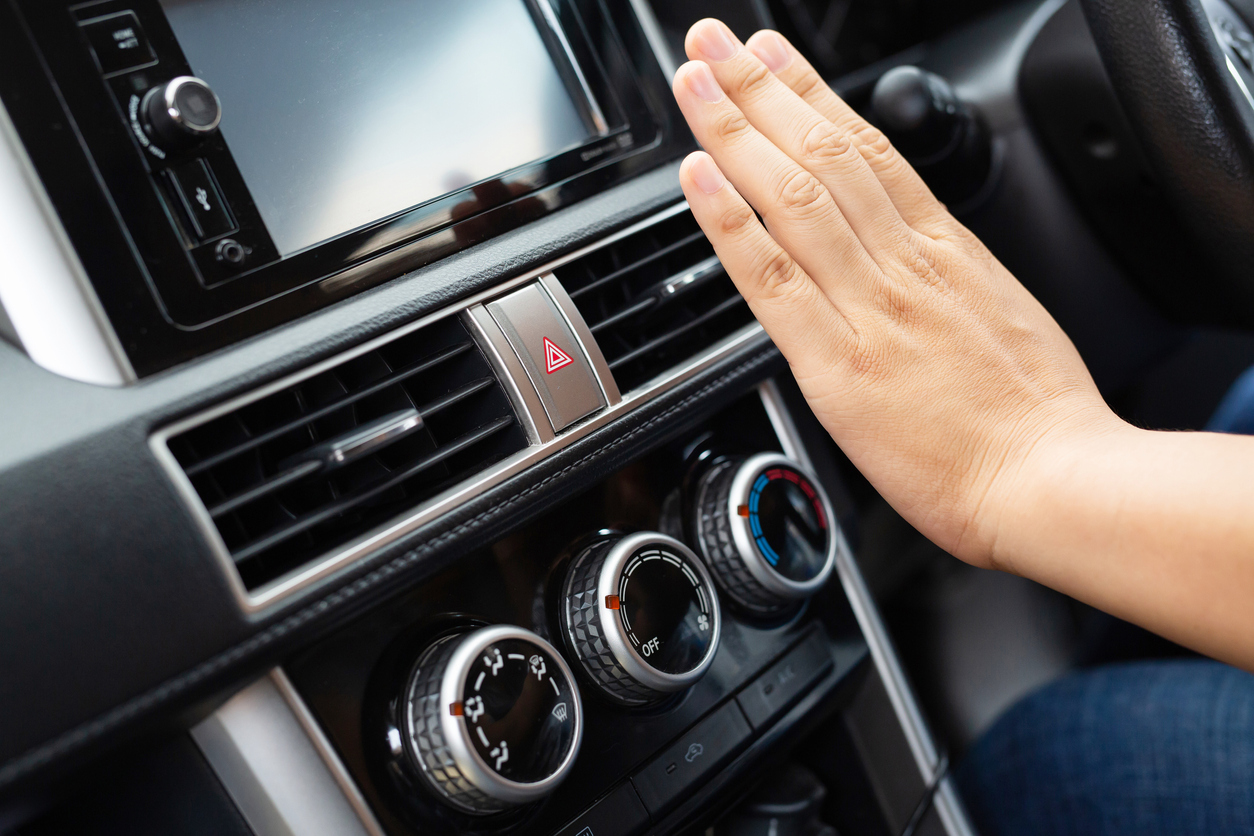
Our Classic Auto Group Decoder is back in business with another installment of our Automotive Terminology lessons. We’re here to decode and demystify the jargon, vocabulary, and terms so you can feel confident when going in for service appointments or shopping for a new ride. Today we’re covering the vital appliance you can’t live without for the summer months: The Air Conditioner.

The air conditioning system works by changing refrigerant fluid from liquid state to gaseous state, and this allows it to remove heat and humidity from your car during warmer weather and return cool, dry air to keep you comfortable as you drive. Your car’s air conditioner system can function to cool and heat your vehicle all year round.

Using your AC Compressor while also running the heat can help dehumidify the air inside your vehicle, and thus clearing up window condensation and reducing fogged windshields and windows. As an added bonus, running the AC system for 10-15 minutes per week in cooler months can help keep fluids circulating in the system and keep it from off-season wear.

Your air conditioner should be serviced a minimum of once or twice per year. If you notice that your system is not functioning properly, you can call our trusted service center to schedule a maintenance appointment.

There are a few things that may be happening with your AC system to make it malfunction:
- Electrical issues such as blown fuses, pressure switches, temperature switches, or defective blower fans may be the culprit.
- Your cabin’s air filter may be clogged, which leads to poor air quality and cooling output.
- Leaves and debris may be blocking the system and vents; check under the hood and clear out any muck you find and it should improve airflow. If it doesn’t, your mechanic may check the AC Evaporator.
- The AC Condenser may need replacement or cleaning of paper, dust, leaves, or debris clogging the fan and causing an overheat.
- Low refrigerant levels or corroded and worn parts may have damaged the AC Compressor and it may require a service technician to replace it.
The experienced car enthusiast may wish to try troubleshooting their AC issues on their own at home before calling a service technician, but please note that not all parts are user serviceable. If you’re skilled enough to do the basics, we remind you that you will want to wear proper safety equipment such as goggles or safety glasses, and thick gloves in case of contact with refrigerant so you do not get burns or frostbite from contact. If you’re not confident enough to do the maintenance, we’ve got plenty of professional mechanics standing by to help!
Important AC Related Terms to Know:
Air conditioner refrigerant
The liquid used in air conditioning systems, which has the property of boiling at ambient air temperatures.
Air conditioning
The cooling and dehumidification of a vehicles cabin air.
Air conditioning filter
A device that removes contaminants from external air entering the ventilation system.
Air filter
A device that filters incoming air fed to the engine.
Air filter restriction indicator
A device that identifies an impedance to the air filter system.
Air filtration
The removal of solid particulates (such as dust, pollen, mold and bacteria) from a vehicles cabin air by a filter placed in the ventilation system.
![[Facebook]](https://www.classickiaonline.com/blogs/294/wp-content/plugins/bookmarkify/facebook.png)
![[LinkedIn]](https://www.classickiaonline.com/blogs/294/wp-content/plugins/bookmarkify/linkedin.png)
![[Twitter]](https://www.classickiaonline.com/blogs/294/wp-content/plugins/bookmarkify/twitter.png)
![[Yahoo!]](https://www.classickiaonline.com/blogs/294/wp-content/plugins/bookmarkify/yahoo.png)
![[Email]](https://www.classickiaonline.com/blogs/294/wp-content/plugins/bookmarkify/email.png)
Connect with us


- 2026 Kia Sportage Performance and Features for Illinois Drivers
- Top 5 Features of the 2026 Kia Sportage Hybrid
- A First Look at the 2027 Kia Telluride
- Celebrate the Holidays by Gifting a Road Trip to the Michigan Ice Fest 2026!
- Extending the Spirit of The Giving Season: Great Ways to Give Back to the Community For the Holidays (Lake County, Waukegan Area)
Recent Posts
 Warranties include 10-year/100,000-mile powertrain and 5-year/60,000-mile basic. All warranties and roadside assistance are limited. See retailer for warranty details.