


Our Gearhead Guru Guide series is designed to help you gain the knowledge and skills needed to car for your vehicle inside and out. We want to make regular maintenance and basic troubleshooting as easy as possible by sharing our wealth of knowledge! From washing and detailing your car, to organizing your garage, to preparing your vehicle for the ultimate road trip, we’ll be covering a little bit of everything.
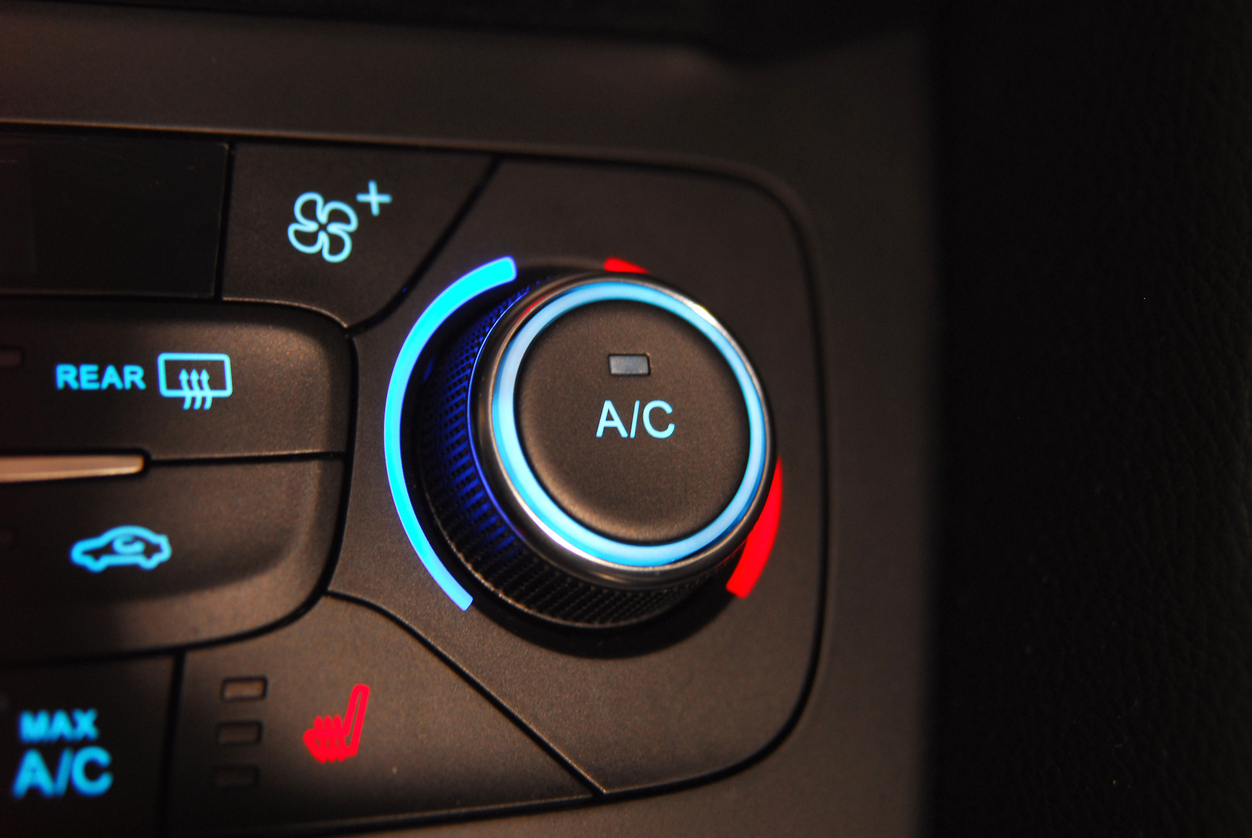
Today’s topic is focused on learning how to diagnose and troubleshoot your car’s air conditioning system. Even if you maintain your car in pristine condition, things still happen due to normal wear and tear, especially when the weather warms and you start utilizing your AC for the first time in a while! If you notice that the air coming out of your car’s vents is not as crisp and fresh as it usually is, there may be trouble brewing. Some common issues leading to your vehicle AC systems malfunctioning include (but are not limited to) refrigerant leaks or low refrigerant, a bad compressor, broken condenser, broken fans, electrical shorts.

Let’s learn more about how to gain a better understanding of what’s happening to diagnose the issue before you bring it in to your trusted technician.
First, we’ll do a quick visual once over. Park your car in a safe spot and engage the emergency brake, then turn your car on, put the temperature dial to the coldest setting on high fan. Observe if the system is producing any air, how cold it is, if there are any odors. Listen closely to ensure that there is reasonable air flow and no mechanical or other abnormal noises are present. If you notice anything amiss, then it’s time to bring it in for a service!

Let’s take a look at some of the most common problems drivers face with vehicle ACs and how to solve them!
If your AC smells stale and mildewy….You’ll need to replace your air filter. As you drive, the air filter collects dirt, dust, water, and other pollutants and particulate matter. After some time, this can lead to build up and produce a stale odor. You can remedy this by replacing the air filter! Sometimes that doesn’t fully alleviate the problem, and you may need to ask your trusted service technician to do an anti-bacterial treatment.
If the vents are producing air but it isn’t cold…This is a sign that you may have a refrigerant leak in your system. A leak can happen at any time, and is most offen caused by a hole, broken hose, issue with the compressor or condenser, or even the evaporator. You’ll need to take the vehicle to your trusted service technician; they’ll perform a special test utilizing a black light to look for the location of the refrigerant leak. Once they’ve remedied the source of the leak, they’ll recharge the refrigerant and it should blow cold air again.
If there is no air coming out of the vents at all…it’s time to take the vehicle in to a trusted service technician. In general, no air flow from the AC can point to a much larger problem such as a blown fuse or bad relay, blocked air intake (either at the exterior windshield vents or in the recirculation process), damaged belts or detached belts, broken or blocked hoses preventing airflow from the vents, damage to the blower motor or blower resistor. If you’d like to try troubleshooting at home, you can replace the fuses or the relay yourself with a little elbow grease. However, if the problem persists your mechanic will administer a test to the other components and replace them as needed.

If the air comes out of the vents cool but not cold enough…this may indicate you need a recharge of your AC refrigerant. If your technician checks the refrigerant and it’s at an adequate level ,it may be a sign that you have a blocked or failed condenser unit; the condenser may have a blockage or be damaged, reducing or stopping its ability to convert the refrigerant from gas to liquid, leading to inadequate temperatures. If may also be a result of a failed clutch switch, rendering the air compressor inoperable, and preventing it from condensing liquid refrigerant into gas. Your AC will not be able to properly cycle unless your technician is able to test and replace these parts.
If your AC system makes a terrible noise when you turn it on…continuing to use the AC is going to exacerbate the problem. The system should be virtually silent with very little sound minus the flow of air from the vents. If you hear anything like rattling, banging, squealing, or other unusual noises there may be something as simple as leaf debris blocking the airflow, or something larger like one of the major components gone awry. Resist using the AC system and bring it in to your local mechanic for a once-over. They’ll perform an inspection to determine which components are failing or damaged, and will replace them as needed.
If you’re more of a visual learner, you can check out this informative video from The Car Wizard on YouTube!
![[Facebook]](https://www.classickiaonline.com/blogs/294/wp-content/plugins/bookmarkify/facebook.png)
![[LinkedIn]](https://www.classickiaonline.com/blogs/294/wp-content/plugins/bookmarkify/linkedin.png)
![[Twitter]](https://www.classickiaonline.com/blogs/294/wp-content/plugins/bookmarkify/twitter.png)
![[Yahoo!]](https://www.classickiaonline.com/blogs/294/wp-content/plugins/bookmarkify/yahoo.png)
![[Email]](https://www.classickiaonline.com/blogs/294/wp-content/plugins/bookmarkify/email.png)
Connect with us


- 2026 Kia Sportage Performance and Features for Illinois Drivers
- Top 5 Features of the 2026 Kia Sportage Hybrid
- A First Look at the 2027 Kia Telluride
- Celebrate the Holidays by Gifting a Road Trip to the Michigan Ice Fest 2026!
- Extending the Spirit of The Giving Season: Great Ways to Give Back to the Community For the Holidays (Lake County, Waukegan Area)
Recent Posts
 Warranties include 10-year/100,000-mile powertrain and 5-year/60,000-mile basic. All warranties and roadside assistance are limited. See retailer for warranty details.