


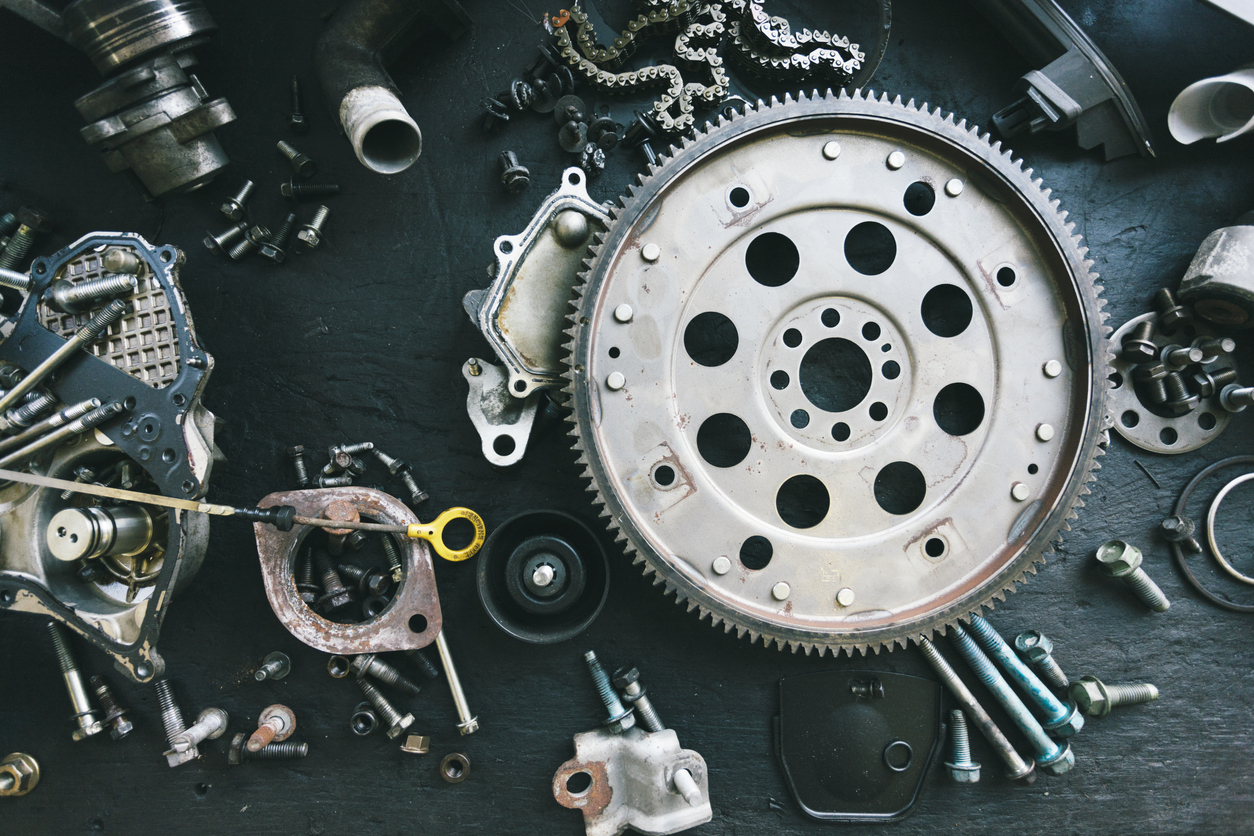
We understand that for most of our customers, buying and selling and repairing cars is not a part of your daily lives, but we’re here to help! There’s still plenty of important knowledge we can pass along to make the process easier.
Thanks to our handy-dandy guide to automotive terminology, you’ll be able to “talk shop” like the best in the business. If you’d like to learn more about key phrases and automotive vocabulary before you embark on your car buying journey, look no further than today’s blog post!

Let’s get started:
Today we’re taking a look at the different terms and options for replacing parts of your vehicle. You may hear your mechanic utilizing these terms to differentiate between quality, availability, and price points of parts for your vehicle. Understanding what each of these phrases means can help you select the right replacement for your car at the cost that’s right for your wallet!
Genuine Parts – These are sometimes also referred to as Original Equipment, and they are parts mad by the original manufacturer of your machinery. They will come in a branded box and are often backed by a manufacturer’s guarantee. Choosing a Genuine Part/Original Equipment option ensures that they’ll be the most accurate, best fit and most reliable parts to replace in your vehicle, however they’re also the priciest option.
OEM (Original Equipment Manufacturer) – OEM parts are supplied by your vehicle’s manufacturer and approved as genuine equipment. An OEM part may be made by an external manufacturer, but supplied to those who make and assemble the machinery and vehicles. These OEM parts are identical to the factory pieces original to your vehicle, and will come in packaging from the company who made it. These parts are slightly cheaper than genuine parts from the automaker, making them a good mid-range budget option, and they generally do not override your vehicle’s warranty restrictions and requirements.
Aftermarket – These are brand new replacement parts for your vehicle that were not made by the original equipment manufacturer. Oftentimes these are used to replace damaged parts in your vehicle, especially if the automotive parts are for a discontinued or classic car. Aftermarket are intended as generally budget friendly replacements for original parts, but since they vary in price and quality they may not always be as reliable as OEM or GP/OE options. If you have a new or leased vehicle, adding an Aftermarket part may void your warranty, so always check with your trusted mechanic and consult your paperwork before installing them.

While the above three part options are generally referred to during repairs for newer vehicles, there are other options available to those who have vehicles out of warranty. These may also be a great option for those of you who have a classic vehicle in need of repairs with hard to source replacement parts.
Other options available to you may include Used Parts, Refurbished/Reconditioned Parts, and Remanufactured parts. Used parts may be sourced from vehicles that have been scrapped for parts. They are the most economical option, but are often the least reliable and most frequently in need of replacement down the line. There’s usually no way of knowing how long they’ve been used or how much mileage has been run up. Reconditioned parts, or refurbished parts, are used components that have been thoroughly cleaned and repaired, while broken pieces such as bolts, screws, and fasteners have been replaced with new ones; these are fairly easy to find and are a bit more reliable than the average used part. Remanufactured or rebuilt parts are old vehicle parts that have been restored to “good as new” condition through meticulous process and rigorous inspection.
What terminology or terms would you be interested in learning more about? Let us know by messaging us on social media or leaving us a comment! We’d love to have your input so we can continue to improve our content and provide you with even more thorough insights.
Is your vehicle in need of service or repair? Just give our specialized and trusted mechanics a call at the Classic Auto Body Shop of Waukegan! We’ll be happy to set you up with a routine maintenance appointment, oil change, or other repair services as needed.
![[Facebook]](https://www.classickiaonline.com/blogs/294/wp-content/plugins/bookmarkify/facebook.png)
![[LinkedIn]](https://www.classickiaonline.com/blogs/294/wp-content/plugins/bookmarkify/linkedin.png)
![[Twitter]](https://www.classickiaonline.com/blogs/294/wp-content/plugins/bookmarkify/twitter.png)
![[Yahoo!]](https://www.classickiaonline.com/blogs/294/wp-content/plugins/bookmarkify/yahoo.png)
![[Email]](https://www.classickiaonline.com/blogs/294/wp-content/plugins/bookmarkify/email.png)
Connect with us


- 2026 Kia Sportage Performance and Features for Illinois Drivers
- Top 5 Features of the 2026 Kia Sportage Hybrid
- A First Look at the 2027 Kia Telluride
- Celebrate the Holidays by Gifting a Road Trip to the Michigan Ice Fest 2026!
- Extending the Spirit of The Giving Season: Great Ways to Give Back to the Community For the Holidays (Lake County, Waukegan Area)
Recent Posts
 Warranties include 10-year/100,000-mile powertrain and 5-year/60,000-mile basic. All warranties and roadside assistance are limited. See retailer for warranty details.