


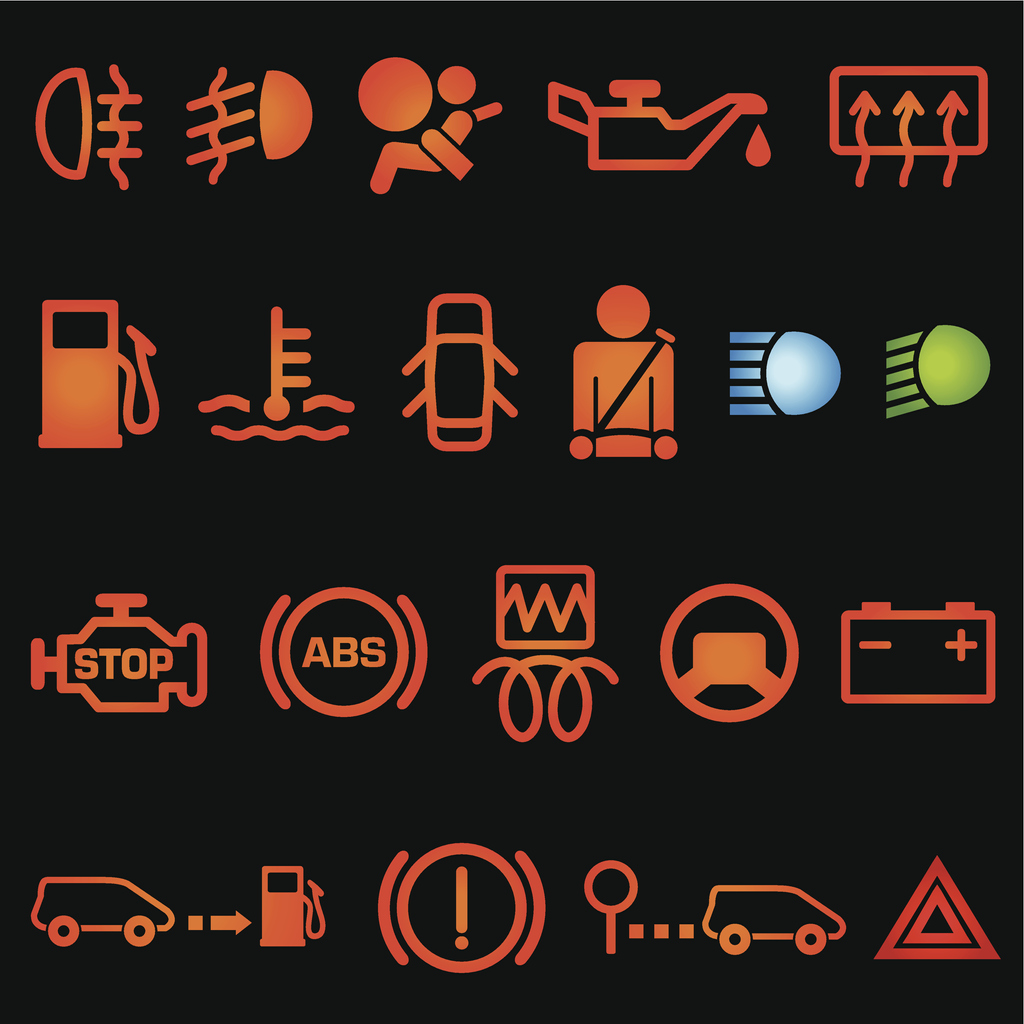
We’re back with another great edition of Classic’s Automotive Terminology Decoder! Today, we’re helping you become an automotive pro by understanding the ins and outs of your vehicle’s emergency lights signals. When those dashboard lights click on and illuminate, it can be a little bit overwhelming or stressful. Today, we’re going to take some of the guesswork out of the situation, and help you understand which emergency lights are a critical warning and require immediate service, or whether you’ve got a little bit of wiggle room to wait for an appointment.

Please note that dashboard lights may vary slightly from model to model, or even from year to year. The symbols below will help guide you through and avoid guesswork, and are standard on most vehicles. For the most accurate depiction of your make/model’s lights, you can check your vehicle’s instruction manual from the manufacturer.

The Engine Temperature Warning Light
On your vehicle this may look like a thermometer with wavy lines below it or simply the word TEMP in all caps. Either way, this is one of the major lights you do not want to ignore. This is a sign that your engine is experiencing a serious problem and is overheating. The best thing to do is pull over as soon as you can, and turn off the engine. You will want to pull over and request emergency roadside assistance and have it towed to the nearest or local service center.

The Oil Pressure/Oil Level Light
This will look like a little can of oil with a droplet or simply the word OIL in all caps. When this light is on, it means that your vehicle’s oil is dangerously low. This could signify that you’ve forgotten an oil change or top off, or it may indicate a serious leak in oil. Your vehicle could be damaged significantly if you continue to drive it in this condition. Your best option is to pull over and check the engine oil levels. You’ll want to call roadside assistance and have it towed to the nearest or local service center.

The Check Engine Light
This is the most notorious light on your dashboard, and chances are you’ve experienced it at least once if not more in your lifetime if you’ve driven an older vehicle or have not maintained your regular tune-ups and service calls. This symbol looks like a miniature car engine, or may just be the word ENGINE in all caps. This indicates that your vehicle’s on board computer system has received an error code, also known as a Diagnostic Trouble code or DTC. Your local mechanic will be able to read the code using a special piece of equipment to find out what triggered the light. They’re not always emergency alerts, but it’s best that you do bring your vehicle ASAP to ensure that it is not a catastrophic issue; the sooner you bring it in, the less likely you are to continue to do more costly damage to your vehicle.

Brake System Warning Lights
Usually this dash light indicates that you’ve accidentally left your parking brake engaged. However, if the light is still illuminated when the parking brake has been disengaged, you’ll want to bring the car in for an inspection at your local mechanic. This may indicate a serious problem in your vehicle’s brakes system, and that is a vital repair as it’s dangerous to drive with faulty or damaged brakes and reduces your ability to avoid accidents. It may indicate that you are experiencing hydraulic loss, low brake fluid in the master cylinder, an issue with the ABS, new brake pads, or parking brake adjustment among other things.
Now that we’ve got the vital information out of the way, check out this really helpful video that breaks down every single warning light on your dashboard:
![[Facebook]](https://www.classickiaonline.com/blogs/294/wp-content/plugins/bookmarkify/facebook.png)
![[LinkedIn]](https://www.classickiaonline.com/blogs/294/wp-content/plugins/bookmarkify/linkedin.png)
![[Twitter]](https://www.classickiaonline.com/blogs/294/wp-content/plugins/bookmarkify/twitter.png)
![[Yahoo!]](https://www.classickiaonline.com/blogs/294/wp-content/plugins/bookmarkify/yahoo.png)
![[Email]](https://www.classickiaonline.com/blogs/294/wp-content/plugins/bookmarkify/email.png)
Connect with us


- 2026 Kia Sportage Performance and Features for Illinois Drivers
- Top 5 Features of the 2026 Kia Sportage Hybrid
- A First Look at the 2027 Kia Telluride
- Celebrate the Holidays by Gifting a Road Trip to the Michigan Ice Fest 2026!
- Extending the Spirit of The Giving Season: Great Ways to Give Back to the Community For the Holidays (Lake County, Waukegan Area)
Recent Posts
 Warranties include 10-year/100,000-mile powertrain and 5-year/60,000-mile basic. All warranties and roadside assistance are limited. See retailer for warranty details.