


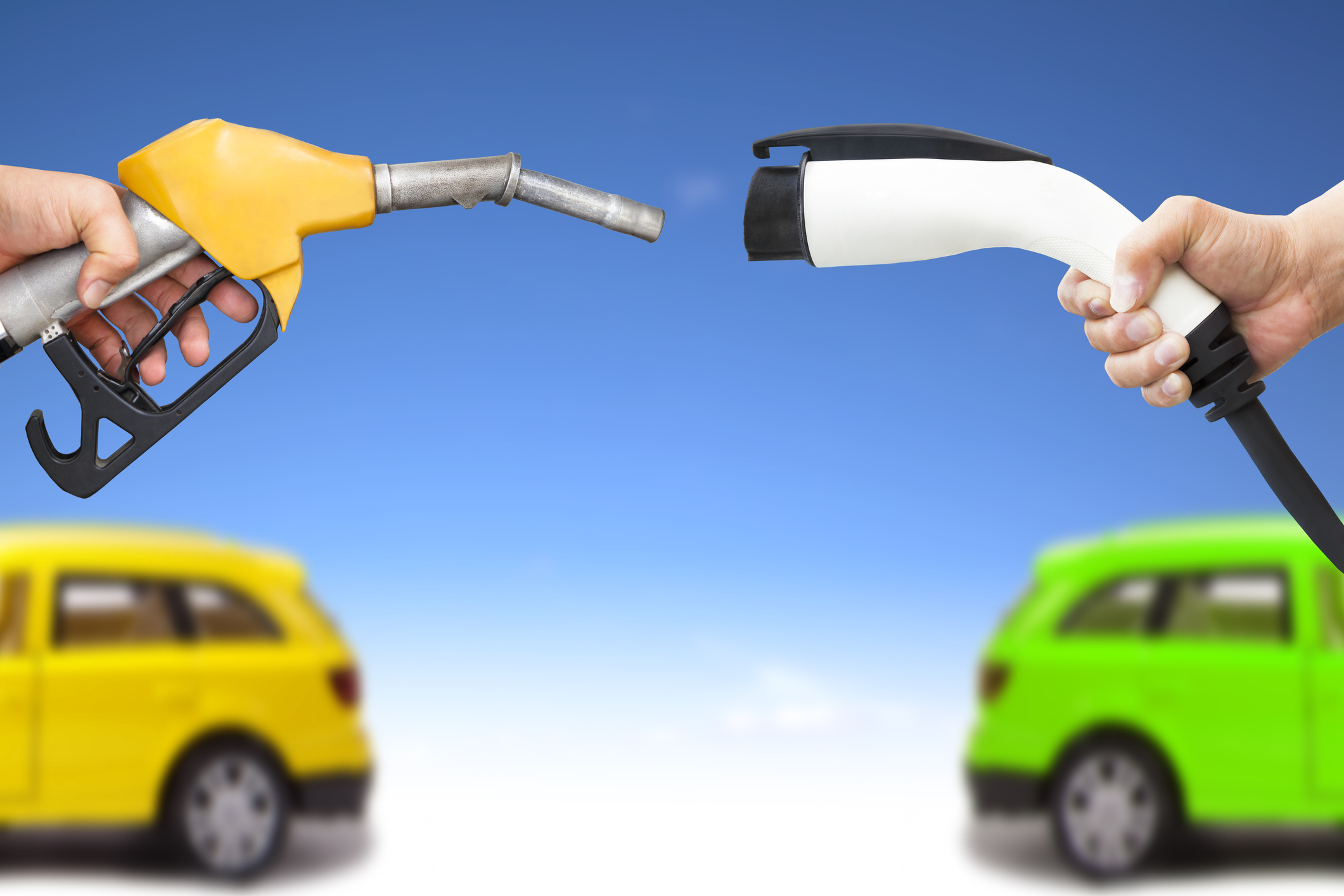
Looking for a vehicle option that’s a little more environmentally friendly? Curious about the US Government’s plans for the move to all-electric in the next few decades? Feeling overwhelmed with all of the options out there, and not sure which one is the right type for you? Well, we’re here to help arm you with the knowledge and power to make informed choices, and ease your anxieties around the car buying process. Today, we’re going to take a look at the qualities for hybrids, electric, and combustion engine vehicles to help you figure out which is the right buy for you, your driving style, and lifestyle needs.

First, let’s break down the types of cars on the market today:
Full Hybrids: Vehicles considered “full hybrid” are able to run on one or both of their motors simultaneously. The primary source of power is from the gasoline engine, with the electric motor providing additional power; the electric motor or battery recharges via the use of the gasoline engine. These vehicles tend to have larger batteries and more powerful electric motors, and they do cost more than mild hybrid models, but offer better fuel efficiency. You may also hear this referred to as a “parallel hybrid”. They do not need to be plugged in; all energy comes from gasoline, but they are low-emission vehicles.
Mild Hybrids: Vehicles with this system utilize the electric motor to relieve some of the load of the gasoline powered internal combustion engine via low-output electric motors. The electric motor does not power the vehicle on its own, but does assist in starting the car and braking or slowing down via something called regenerative braking; regenerative braking allows the kinetic energy from slowing down to be converted to electricity and stored in the MHEV’s battery. They are a good entry point into hybrid vehicle ownership, as they do offer mild fuel economy benefits and a slight decrease in emissions output. They do not need to be plugged in; all energy comes from gasoline, but they are low-emission vehicles.
Plug-In Hybrids: Vehicles with plug-in features combine the best elements of traditional internal combustion engines, along with the benefits of electric rechargeable battery motors. Like a full hybrid vehicle, they have both a gasoline and electric motor, with the exception being the onboard battery can also be recharged externally via charging stations or plugging into an at-home power source. It offers a larger battery and greater all-electric driving range than traditional hybrids, but also relies on gas or diesel fuel.
All-Electric: Vehicles with all-electric or battery electric vehicles only have an electric motor instead of internal combustion engines. The engine draws electricity from a battery which is charged and recharged from an external source. These vehicles have zero emissions.
Fuel Cell Electric Vehicles: These alternative electric vehicles are another great choice for zero emission driving, but they are not as widely available as the aforementioned. FCEVs receive their electric energy from a chemical reaction which generates electricity via hydrogen or other source.
Internal Combustion Engine: Vehicles with an ICE or IC Engine are heat engines in which the combustion of fuel inside a combustion chamber powers the vehicle’s engine. These are the most common form of heat engines and can be found in many forms of transportation such as personal vehicles, boats, trains, and even airplanes. They rely on the chemical reaction to turn that fuel into mechanical energy power. The US Government aims to plan phasing out sale of these internal combustion fuel powered engine vehicles by 2035.
What type of vehicle best suits my needs?
Since all-electric vehicles are still newcomers to the market, they generally have a little higher price point up front compared to hybrid or gasoline model vehicles. However, some vehicles may be eligible for local and federal tax incentives through special programs and grants, which may help offset the overall cost. Since EVs do not have gas engines, you will save in maintenance costs such as regular fueling and oil changes, and the overall maintenance is less than a hybrid. EV vehicles can be charged at any of the 60,000+ various electric charging stations across the country, but can also be recharged overnight using your own home electricity. While battery range is improving and many are 300+ miles per charge, some models may not yet have the same driving range mileage as their hybrid or gasoline engine counterparts just yet; others may match or exceed their traditional engine competitors. Repair costs for electric vehicles may be a little higher, and they require a specific skillset and safety training that not all mechanics may not have experiences working on/
Hybrid vehicles are a wonderful middle ground between gasoline ICE vehicles and EVs. Hybrids have a fantastic fuel efficiency, lower emissions, and refueling at gas stations is more common and accessible right now than electric-only charging stations. The annual fuel costs for hybrids area little higher than electric-charging prices, depending on the price of gas. Hybrids can also travel hundreds of miles without refueling, and most models can go longer between oil changes than traditional gasoline engines. Plug-in hybrids offer additional features such as utilizing their battery power instead of fuel for shorter trips, which may save you money in the long run. Plug-in hybrids may cost more than their traditional gasoline counterparts, but many PHEVs are also eligible for similar tax rebates as EVs. Repairs and maintenance will be a little less than gasoline-only engine vehicles, but some require specialized mechanics.
Gasoline combustion engine cars are currently priced a fair bit lower than their EV and Hybrid/PHEV counterparts. They offer convenience of being able to easily find a fuel station or mechanic when you need service, but they have overall higher maintenance and operating costs. The downside is that by 2035, the US government hopes to stop the sale of gasoline powered engines; that means your next vehicle will have to be an alternative fuel option; some states are already setting a limitation on this in the near future. These are also the least “green” vehicles on the market, as they have high emissions and more waste.
Still not sure which type of vehicle is right for you? Here at Classic, we look forward to sharing our passion for greener, cleaner futures with our clients and arming them with the knowledge to choose the perfect car. Feel free to stop by our dealership and ask our trusted sales staff for more information and insights. We’ll get you behind the wheel of the latest and greatest in driving technology, and will help point you in the right direction to find the car of your dreams!
![[Facebook]](https://www.classickiaonline.com/blogs/294/wp-content/plugins/bookmarkify/facebook.png)
![[LinkedIn]](https://www.classickiaonline.com/blogs/294/wp-content/plugins/bookmarkify/linkedin.png)
![[Twitter]](https://www.classickiaonline.com/blogs/294/wp-content/plugins/bookmarkify/twitter.png)
![[Yahoo!]](https://www.classickiaonline.com/blogs/294/wp-content/plugins/bookmarkify/yahoo.png)
![[Email]](https://www.classickiaonline.com/blogs/294/wp-content/plugins/bookmarkify/email.png)
Connect with us


- 2026 Kia Sportage Performance and Features for Illinois Drivers
- Top 5 Features of the 2026 Kia Sportage Hybrid
- A First Look at the 2027 Kia Telluride
- Celebrate the Holidays by Gifting a Road Trip to the Michigan Ice Fest 2026!
- Extending the Spirit of The Giving Season: Great Ways to Give Back to the Community For the Holidays (Lake County, Waukegan Area)
Recent Posts
 Warranties include 10-year/100,000-mile powertrain and 5-year/60,000-mile basic. All warranties and roadside assistance are limited. See retailer for warranty details.