


Oct 10, 2023
Last month we covered what to do if you are in a collision with wildlife for RoadKill Day, and how to handle the situation safely. Today we’re going to share some additional pointers for how you can best avoid the collision in the first place as part of acknowledgements of World Animal Road Accident Awareness Day.

Here are some thoughtful pointers to consider as a defensive driver sharing roadways with wildlife:
- Be on high alert when driving through wildlife areas such as parks, rural areas, undeveloped land, wetlands, woodlands and forests, and/or through places such as national and state parks and wildlife preserves. If possible, limit your driving through these areas at dawn and dusk, when wildlife has the highest probability of crossing. If you must drive through these areas, be sure to stay informed about the behavior and patterns of the animals in the region so you can notice subtle signs and movement more keenly.
- Avoid littering! If you’re camping outdoors, stopping at a rest stop, having a roadside picnic, or visiting a nature site, be sure to bring all food and trash back out with you when you return. Leaving litter or food waste behind in public outdoor areas can increase the presence of wildlife, and create further wildlife attraction to roadside locations by way of easy food sources. Bring out what you take in!
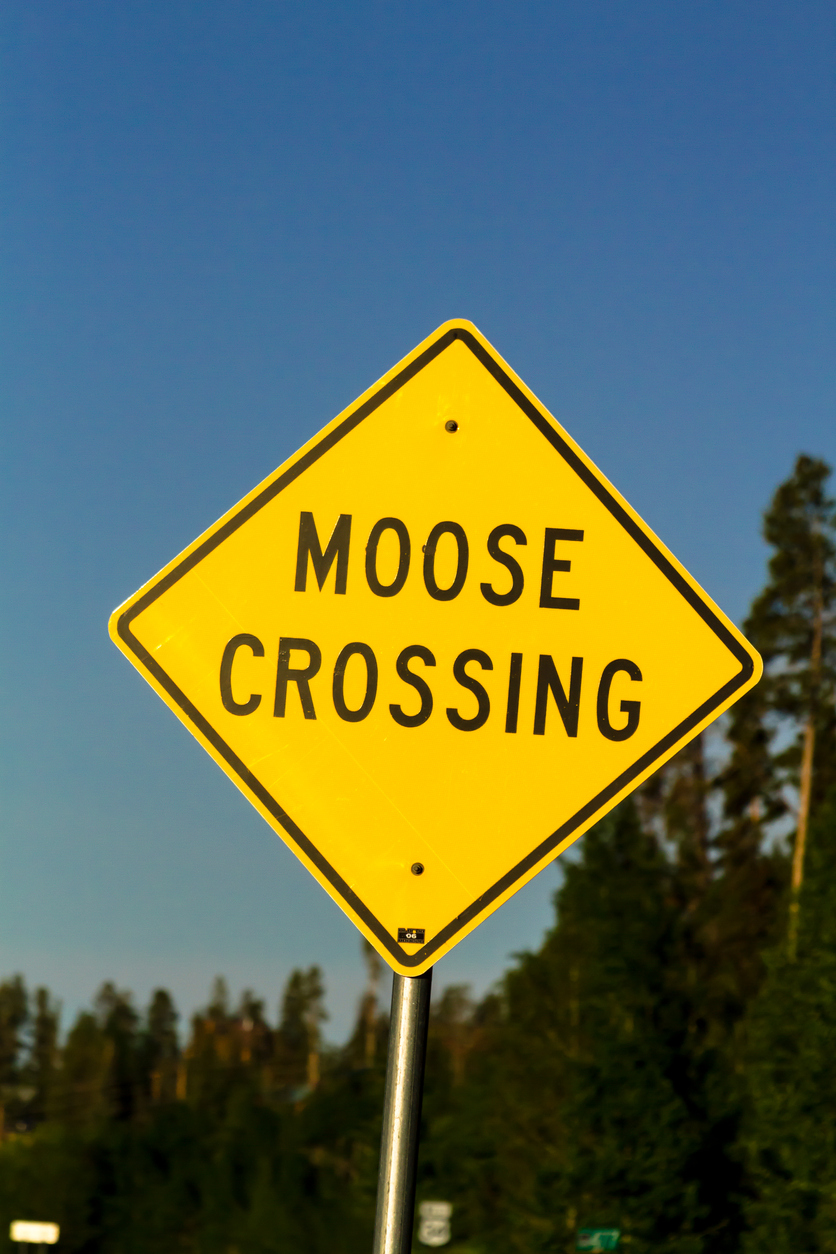
- Be alert and aware of the road signs along the highway, as they’re usually placed in areas of high-collision probability. These may be depicted with a graphic of the particular species of animal, or may be generalized to “wildlife” crossing text signs.
- It’s advisable to also ask your passengers to assist you in scouting any potential hazards along the way, as they can help you navigate while you keep your eyes safely on the road ahead. As a driver, you should always scan the road from left to right, and from right to left, ensuring that you’re thorough and frequently inspecting the roadside for incoming wildlife.
- Always make sure you and your passengers are fully seatbelted and properly seated in the vehicle in case you have to stop short, or in the event collision with an animal is unavoidable.
- Slow down and keep extra car length distance between you and the cars ahead of you; this allows for increased stopping distance and less chance of collision with another vehicle.
- When driving at night, keep a lookout for animals eyes which will be very reflective in the glare of headlights. Unless in the case of extreme weather such as low-visibility fog or snow, it’s recommended that you employ your high beams to scan the road at further distances for incoming wildlife. Bear in mind that headlights do not illuminate objects as easily when driving at higher speeds, so when possible drive at a slower speed for safety.
- Make sure you have proper visibility by ensuring a clear windshield, free of cracks, muck, and debris; be sure to replace your windshield wipers and consider adding a hydrophobic coating to the glass for increased visibility in inclement weather. Ensure that your headlights are in proper working order, and consider opting for headlights with higher luminous intensity.
- If an animal crosses safely through traffic to the other side of the road, do not presume that it will stay there. Many animals often make split-second decisions to turn back and go across where they came from. Be aware and alert for animals that change direction!
![[Facebook]](https://www.classickiaonline.com/blogs/294/wp-content/plugins/bookmarkify/facebook.png)
![[LinkedIn]](https://www.classickiaonline.com/blogs/294/wp-content/plugins/bookmarkify/linkedin.png)
![[Twitter]](https://www.classickiaonline.com/blogs/294/wp-content/plugins/bookmarkify/twitter.png)
![[Yahoo!]](https://www.classickiaonline.com/blogs/294/wp-content/plugins/bookmarkify/yahoo.png)
![[Email]](https://www.classickiaonline.com/blogs/294/wp-content/plugins/bookmarkify/email.png)
Connect with us


- 2026 Kia Sportage Performance and Features for Illinois Drivers
- Top 5 Features of the 2026 Kia Sportage Hybrid
- A First Look at the 2027 Kia Telluride
- Celebrate the Holidays by Gifting a Road Trip to the Michigan Ice Fest 2026!
- Extending the Spirit of The Giving Season: Great Ways to Give Back to the Community For the Holidays (Lake County, Waukegan Area)
Recent Posts
 Warranties include 10-year/100,000-mile powertrain and 5-year/60,000-mile basic. All warranties and roadside assistance are limited. See retailer for warranty details.